Design Thinking
Adventist schools across the Southwest are moving from traditional,
teacher-centered approaches to innovative, learner-centered classrooms, places where students take ownership of their learning and see how it connects to the world around them.
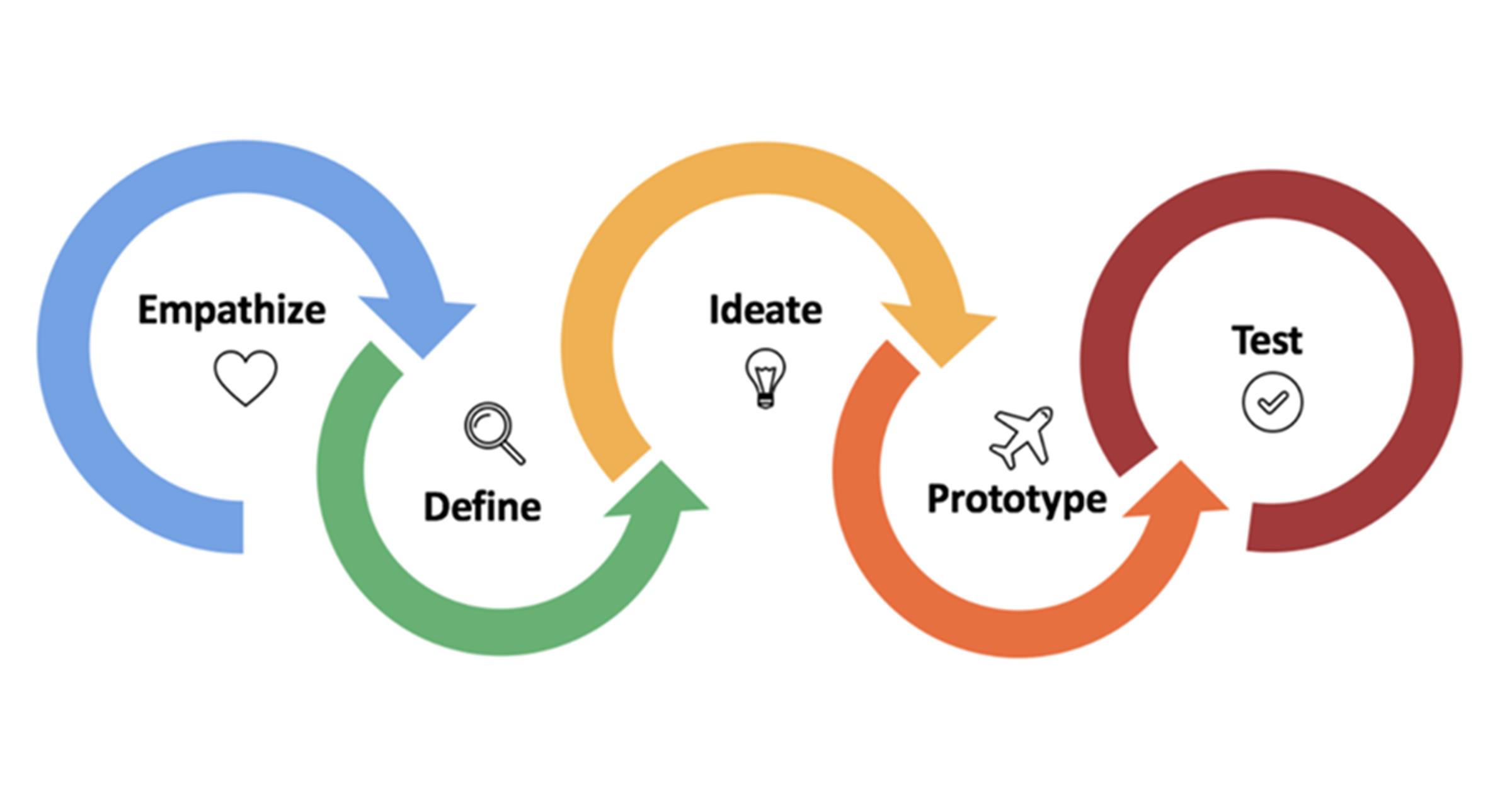
In these classrooms, students don’t just memorize information; they learn to solve real-world problems through a process called Design Thinking. By emphasizing empathy, experimentation and collaboration, this approach encourages children to think creatively, work together and apply what they learn to meaningful projects.
Here's a look at how the Design Thinking process works.
Empathize
The first phase focuses on understanding those whom the design is meant to help. In this phase, the student designers gain a deep understanding of the needs, wants and motivations of users. They are then prepared to create relevant solutions that effectively address user requirements and expectations.
Designers research the needs and perspectives of the people they are designing for through techniques such as observation, interviews and immersing themselves in the environment. For example, while designing a playground for differently abled children, students interview the children and observe them on the playground to identify needs, challenges and opportunities for improvement.
Define
Designers interpret and synthesize the information that is gathered during the Empathize phase. This allows them to define the problem, which helps them stay focused on a specific challenge instead of jumping to conclusions. It also assists them in thinking about how this can be a collaborative approach.
Designers articulate a clear and compelling problem statement based on their users’ needs, often beginning with “How might we …” For example, “How might we improve our playground to meet the needs of our differently abled students?”
Ideate
This phase is focused on generating possible solutions for the problem defined in the previous phase. With a clear problem statement, designers can generate a wide range of creative, innovative ideas for solutions. A brainstorming process is used to explore different ideas, challenge assumptions and produce innovative solutions.
Designers often record ideas on sticky notes to add to a solution wall. Then students might categorize the proposed solutions and select the most relevant.
Prototype
Next, designers create prototypes to test their selected solutions. Prototypes allow the designers to identify usability issues and refine the design before investing in production. This is the experimental phase of turning ideas into inexpensive, scaled-down versions of the final product or service.
Designers develop prototypes—such as rudimentary sketches, models or storyboards—using craft supplies or employing digital tools for a simulation. For example, they might use cardboard and construction paper to create a playground model that incorporates selected solutions.
Test
Through user testing and feedback, the designers refine and improve their prototypes. Their ultimate goal is to ensure that the product satisfies the users’ needs.
Designers use the insights obtained during this phase to serve as a foundation for the next iteration of the Design Thinking process, if needed. For example, the designers might test simulations of various playground designs with the differently abled students to determine if they were viable solutions.
Ellen G. White noted in Education that when students are “cut off from the responsibilities of everyday life, they [students] become absorbed in study, and often lose sight of its purpose.” Design Thinking incorporates real-life problems and solutions to engage students as they learn to think like designers. This process helps students think differently and develop creative solutions to problems they encounter in everyday life. a
By Carol Campbell, Ph.D.
Southwestern Union Vice President for Education